To Stick or Not to Stick? My Take on Guitar Decals, Tone, and Resale Value
Look, we’ve all been there. You’re staring at your guitar—maybe it’s a brand-new Player Series Strat or a beat-up acoustic you found in a pawn shop—and you have a handful of stickers from your favorite local brewery or a vintage punk band. You want to make it yours.
But then that little voice in your head (the one that sounds suspiciously like a grumpy luthier) asks: “Is this going to ruin the sound? Will I ever get this off?”
As someone who has spent years both playing on stages and obsessing over gear specs, I’ve seen the “sticker-bomb” trend go from iconic (think Billie Joe Armstrong’s “Blue”) to disastrous. Let’s break down the reality of stickering your axe through the lens of performance, maintenance, and long-term value.
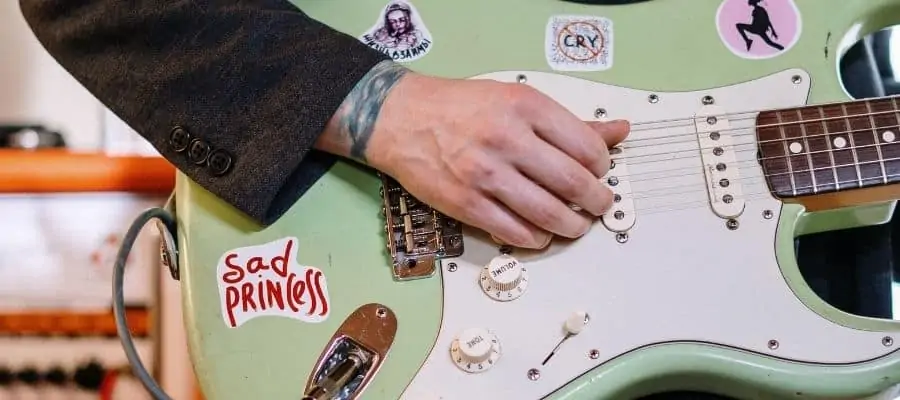
Does It Actually Kill Your Tone?
This is the big one. I hear purists claim a single sticker will “choke” the wood. In my experience, the answer depends entirely on what you’re playing.
Acoustic vs. Electric: The Great Vibration Debate
I’ve put together a quick reference table based on what I’ve observed in the studio and on the workbench:
My Expert Tip: If you have a high-end Martin or Taylor with a solid spruce top, keep the stickers off the soundboard. Those tops are engineered to vibrate at specific frequencies; adding mass via vinyl and adhesive will dull your high-end response. On a Squier Telecaster? Stick away. You won’t hear the difference through a Cranked Orange amp.
The “Vibe” Factor: Why I Love (and Hate) Guitar Stickers
The Pros: Making It Personal
Instant Identity: Your Gibson Les Paul looks like every other Gibson on the rack until you put your mark on it. It builds a sentimental bond.
The “Punk” Aesthetic: Let’s be real—some genres just look better with a bit of chaos.
Battle Scar Camouflage: I’ve used stickers to hide “oops” moments—like a deep finish chip from a rogue cymbal stand.
The Cons: The Reality Check
The “Tan Line” Effect: This is the one most people forget. Even if you remove the sticker safely, the wood around it will age and fade due to UV light. When the sticker comes off, you’ll be left with a permanent “ghost” of the decal in the original finish color.
Resale Value Suicide: If you plan on trading up later, keep in mind that Guitar Center or private collectors will often dock 20% to 50% of the value for a stickered guitar. It suggests the owner didn’t “respect” the instrument.
Finish Interaction: Some adhesives literally melt into the finish (especially Nitrocellulose).
Location, Location, Location
If you’re going to do it, do it right. Here is my personal hierarchy of sticker placement:
- The Headstock: Great for small decals. Just stay away from the serial number and the tuners.
The Pickguard: This is my #1 recommendation. If you change your mind, you can buy a new pickguard for $20 and your guitar is “factory fresh” again. No harm, no foul.
The Back of the Body: The “secret” spot. You get the personal connection without “ruining” the look for the audience.
The Fretboard: Avoid this. Even “fret markers” can feel weird under your fingers during a bend and can leave gunk that’s a nightmare to clean out of rosewood pores.
Safety First: Nitro vs. Poly Finishes
Before you peel and press, you must know what your guitar is coated in.
Polyurethane/Polyester (Modern Fenders, Ibanez, Epiphone): These are basically plastic armor. They are very resistant to chemical reactions. You’re generally safe here.
Nitrocellulose (Gibson, Fender Custom Shop, Vintage): WARNING. Nitro is a “live” finish. The chemicals in sticker adhesive can react with the lacquer, causing it to soften, bubble, or permanently discolor. I personally never put stickers on a Nitro finish. It’s just not worth the heartbreak.
How to Remove Stickers Without Crying
If you’ve inherited a “sticker-bombed” guitar or your tastes have changed, don’t reach for the butter knife.
Peel Slowly: Use a plastic guitar pick to lift the edge.
Mild Heat: A hairdryer on low can soften the glue. Don’t get it too hot, or you’ll warp plastic parts or blister the finish.
The Solvent Test: I use Naphtha (lighter fluid). It’s generally safe for most finishes and cuts through adhesive like butter. Avoid Acetone (Nail Polish Remover)—it will melt many guitar finishes instantly.
Clean and Polish: Once the goo is gone, hit it with a dedicated guitar polish to restore the shine.
The Verdict
Should you put stickers on your guitar? If it’s an entry-to-mid-level instrument and it makes you want to pick it up and play more, absolutely. Music is about expression. But if you’re holding a vintage piece or an investment-grade instrument, keep the stickers on your flight case instead.