

Why Do Guitarists Change Guitars Between Songs? (Stage, Sound & Strategy)
Key Takeaways
Alternate Tunings: Changing tuning mid-set alters string tension and kills the flow of a show; swapping guitars is instant.
Tonal Variety: Different songs require different sonic textures (e.g., the bright snap of a Stratocaster vs. the thick sustain of a Les Paul).
Technical Redundancy: Breaking a string is a show-stopper. A backup guitar ensures the performance continues within seconds.
Setup Requirements: Specific techniques (like slide guitar) require high action and heavy strings, making that specific instrument unplayable for standard solos.
Whether you are watching a stadium tour or a local club gig, you’ve likely noticed the guitarist swapping instruments between tracks. Is it just showing off a collection? Usually, no.
While aesthetics play a role, switching guitars is almost always a practical necessity. From physics and mechanics to sonic architecture, here is the expert breakdown of why guitarists juggle multiple instruments during a performance.
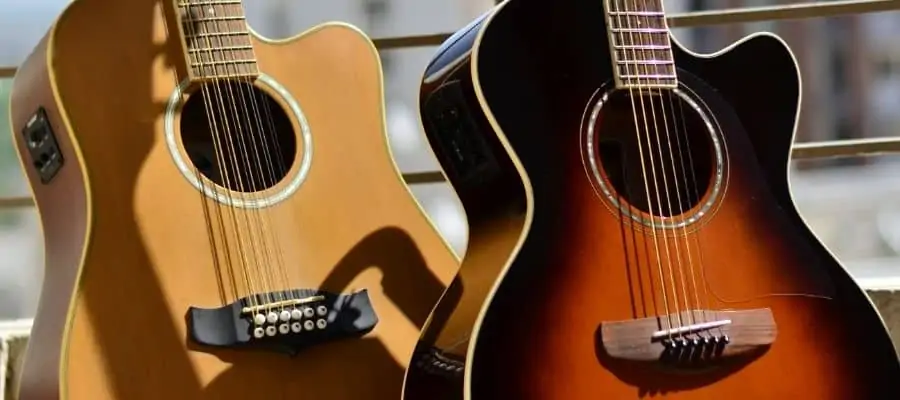
An average guitar player owns between seven and eight guitars. Guitarists have multiple guitars for many reasons.
1. The Physics of Alternate Tunings
The most common reason for swapping guitars is tuning.
While you can retune a guitar on stage using a pedal tuner, it kills the momentum of the show. More importantly, physics often makes it impossible to do quickly.
String Tension & Settling: If a song requires a significant downtune (e.g., Drop C), the strings become loose and “floppy.” If you tune them back up for the next song, the metal stretches and will likely go out of tune within the first few chords.
The “Floating Bridge” Nightmare: On guitars with a floating tremolo system (like a Floyd Rose), string tension is counterbalanced by springs in the back of the guitar. If you change the tuning of one string, it changes the total tension, knocking all five other strings out of tune immediately. You simply cannot retune a floating bridge guitar mid-set.
Intonation Issues: Drastic tuning changes require adjustments to the bridge saddles (intonation) to ensure the guitar plays in tune up the neck. A guitar set up for Standard E will often sound dissonant playing chords in Open G.
2. Tonal Variety (The “Sonic Palette”)
Guitarists view their instruments like painters view brushes. No single guitar can produce every sound.
Pickup Differences: A Single-Coil pickup (common in Fenders) produces a bright, glassy, and cutting sound perfect for funk or clean tones. A Humbucker (common in Gibsons) sounds thick, warm, and handles high-gain distortion without the “hum.”
Acoustic vs. Electric: This is the most obvious switch. If a ballad requires the organic strum of an acoustic followed by a rock anthem requiring electric distortion, a switch is mandatory.
Hollow vs. Solid Body: A hollow-body jazz guitar (like a Gibson ES-175) resonates differently than a solid-body “shred” guitar. To make the song sound authentic to the recording, the guitarist needs the right tool for the job.
3. Reliability: The “Better Safe Than Sorry” Rule
Live performance is unpredictable. The most professional reason to have a second guitar on a stand is redundancy.
If a string snaps during a solo, the song falls apart. If the guitarist has a spare ready, a stage tech (or the guitarist themselves) can swap it in 10 seconds, saving the performance. Without a spare, the audience has to wait 5–10 minutes for a re-string, which can ruin the atmosphere of a gig.
Furthermore, electronics can fail. Output jacks loosen, and pickup selectors wear out. A backup guitar is an insurance policy.
4. Specialized Setups and “Feel”
Beyond sound, guitars feel different to play. Technical players often require specific physical setups for specific songs.
Slide Guitar: Playing with a glass or metal slide usually requires “high action” (strings raised high off the fretboard) to prevent buzzing. Playing standard chords on a slide-setup guitar is difficult and painful.
Capos: While capos are easy to move, taking them on and off requires checking the tuning. It is often faster to grab a guitar that already has the capo positioned and is tuned to pitch.
Neck Profile: A guitarist might prefer a thin, fast neck for a technical metal song but a chunky, rounded neck for a slow blues track.
5. GAS (Guitar Acquisition Syndrome) & Collecting
We cannot ignore the hobbyist aspect. “Guitar Acquisition Syndrome” (GAS) is a real phenomenon where players feel a compulsive desire to expand their collection.
For famous collectors like Perry Margouleff (who owns hundreds of vintage American instruments), guitars are pieces of history. For the average player, owning 7 to 8 guitars allows them to find new inspiration. A Rickenbacker inspires different riffs than a Flying V. Sometimes, a guitarist changes instruments simply because that specific guitar brings out a specific emotion or creative spark that fits the song.
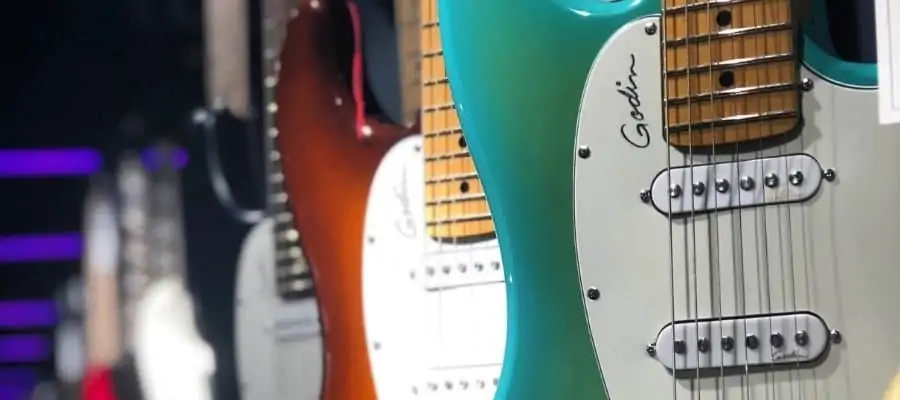
Summary: Which Guitar for Which Genre?
If you are building your own collection or stage rig, here is a quick guide to “matching the hatch”:
Conclusion
While it might look flashy, seeing a guitarist swap instruments is rarely an act of vanity. It is a calculated move to ensure the tuning is stable, the tone matches the song, and the flow of the concert is uninterrupted.
Whether it’s avoiding the nightmare of retuning a Floyd Rose bridge or simply needing the thick growl of a Les Paul after playing a clean Fender track, multiple guitars are the mark of a musician who cares about the quality of their performance.