
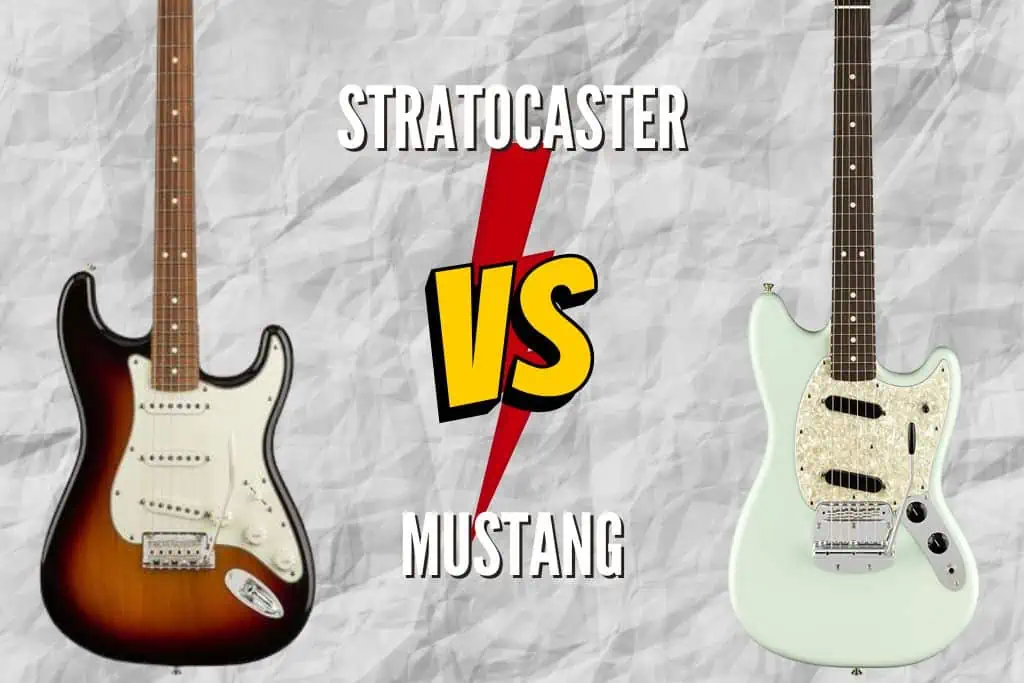
Fender Stratocaster vs. Mustang: Which Is Right for You?
Executive Summary (The Quick Verdict)
Stratocaster or Mustang? Which Fender Electric Guitar Should You Buy? The primary difference between the Fender Stratocaster and the Mustang is the scale length, body shape, and bridge design.
The Stratocaster is a full-scale (25.5″) guitar known for its versatility, “glassy” sustain, and standard tremolo system. The Mustang is a short-scale (24″) “offset” guitar with lower string tension, a smaller body, and a punchier, more aggressive midrange. While the Stratocaster is the industry standard for almost any genre, the Mustang is the “cult classic” favored by alternative rock, grunge, and indie players.
Choose the Stratocaster if: You want the versatile, industry-standard sound of blues, rock, or pop, and prefer a traditional neck feel with more “snap.”
Choose the Mustang if: You have smaller hands, prefer a “slinkier” loose string feel, or want the unique aesthetic and punchy growl of underground rock.
At a Glance: Specs Comparison
A direct comparison of the key specifications defining these two instruments.
1. Construction & Hardware: The Technical Differences
While both guitars share Fender’s DNA—alder bodies, maple necks, and bolt-on construction—they are physically distinct instruments.
The Stratocaster features the iconic double-cutaway body with deep contours (tummy cut and forearm contour) designed for maximum comfort. It utilizes a standard 25.5-inch scale length, which creates higher string tension. This tension contributes to the Strat’s “snap” and sustain but requires slightly more finger strength to bend strings.
The Mustang features an “offset” body design, where the waist of the guitar is skewed. Originally designed as a student model in the 1960s, it has a shorter 24-inch scale length. This shorter scale lowers string tension, making the strings feel “slinkier” and easier to bend. The body is also physically smaller and lighter, making it an excellent choice for smaller players or energetic live performers.
The Bridge Systems: A Crucial Distinction
Stratocaster: Almost always features a “Synchronized Tremolo” bridge. It is stable, familiar, and offers smooth pitch modulation perfect for shimmering chords.
Mustang: This depends heavily on the model.
Vintage/Vintera Models: Feature the traditional “Dynamic Vibrato” (the “cigar tube” tailpiece). It offers extreme pitch flexibility and that classic surf “warble,” but can be finicky to set up.
Modern/Player Models: Often use a “Hardtail” bridge (no whammy bar). This modern update sacrifices the vibrato effect for vastly improved tuning stability and sustain, making it much more practical for gigging.
2. Tone: Glassy vs. Punchy
The sonic difference is arguably the most important factor for buyers.
The Stratocaster Sound The Strat is renowned for its “glassy,” bell-like top end. With three pickups and a 5-way switch, it offers a massive palette of sounds. Positions 2 and 4 (the “in-between” sounds) are famous for their “quack”—a noise-canceling, funky tone that defines everything from Nile Rodgers’ hits to John Mayer’s blues.
The Mustang Sound The Mustang creates a darker, more mid-range focused sound. Because of the lower string tension, it lacks the shimmering high-end of a Strat but makes up for it with a “thumpy” and aggressive character.
Phase Switching: Vintage-style Mustangs include slider switches to put pickups “out of phase,” creating a thin, nasal sound.
Modern Tone: Modern Mustangs usually ditch the phase sliders for a standard 3-way toggle and hotter pickups. This results in a thicker, indie-rock growl that handles distortion pedals exceptionally well—one reason they were the weapon of choice for Kurt Cobain and the Grunge movement.
3. Playability: Which is Easier to Play?
For beginners or players with smaller hands, the Mustang often wins on playability.
String Tension: The Mustang’s shorter scale means you don’t have to press as hard to fret notes. The strings feel looser.
Fret Spacing: The frets are slightly closer together on a Mustang, making wide chords easier to reach.
However, the Stratocaster offers more “fighting room.” The longer scale gives your fingers more space between frets, which many lead players prefer for intricate solos high up the neck. The higher tension also provides more sustain and prevents strings from feeling “floppy” during aggressive strumming.
4. Price & Market Position
Historically, the Stratocaster was the professional model and the Mustang was the student model. Today, that line has blurred, but general trends remain:
The Stratocaster has the widest price range, from affordable Squier Bullet models to ultra-premium Custom Shop instruments costing thousands.
The Mustang is generally more affordable, occupying the mid-range “Player” or “Vintera” series, though vintage 1960s models have skyrocketed in value due to their cult following.
Frequently Asked Questions (FAQ)
Is a Mustang good for beginners? Yes. The Mustang is often considered one of the best electric guitars for beginners because its shorter scale length (24″) and lower string tension make it physically easier to press down the strings compared to a standard Stratocaster.
Can a Mustang sound like a Strat? Partially. A Mustang can get close to the neck-pickup sound of a Stratocaster, but it generally lacks the “quack” of the Strat’s in-between positions and the crystalline high-end sustain, due to the physical differences in bridge construction and string length.
Why did Kurt Cobain play a Mustang? Kurt Cobain favored the Mustang for its small, lightweight body (which fit his frame), its cheap availability in pawn shops at the time, and its “trashy,” punchy sound that suited the grunge aesthetic perfectly.
Conclusion: The Final Verdict
Choosing between the Fender Stratocaster and Mustang isn’t just about specs—it’s about the vibe you want to project.
If you value versatility, tradition, and want a guitar that can handle any gig from a blues bar to a stadium, the Stratocaster remains the undefeated champion. It is the “Swiss Army Knife” of guitars.
However, if you want to stand out from the crowd, need something physically easier to grapple with, or chase the gritty, alternative tones of the underground scene, the Mustang is the superior choice.
Both instruments are legends in their own right. Whether you choose the sleek contours of the Strat or the quirky offset charm of the Mustang, you are investing in a piece of music history.