

How Hard Is It To Learn Guitar? A Realistic Roadmap for Beginners
The guitar is a paradox: it is the most popular instrument in the world, yet it has a notorious dropout rate (Fender reports that 90% of beginners quit within the first year). But just how hard is it to learn to play guitar?
Why? Because while the guitar is easy to approach, it is physically demanding to master. unlike the piano, where pressing a key guarantees a perfect note, the guitar requires you to build physical strength, calluses, and coordination before you can make a pleasing sound.
Is it hard? Yes. Is it impossible? Absolutely not. Here is the honest truth about the learning curve, stripped of the marketing hype.
Key Takeaways
The Learning Curve: Steep at the beginning (physical pain, finger strength), but plateaus once muscle memory kicks in (usually around month 3).
Time Commitment: Consistency beats intensity. 20 minutes daily is superior to a 4-hour binge on Sundays.
The “Shape” Advantage: Unlike piano or wind instruments, guitar is pattern-based. Learn a shape once, move it up the neck, and it’s a new chord.
Learning Can Be Easy And Hard

Guitar vs. Piano: The Difficulty Debate
Some consider that the guitar is easier to learn because it requires less theory. This is a half-truth.
Mechanics: The piano is mechanically easier. You press a key; the note rings true. The guitar is mechanically difficult. You must press the string with the correct pressure, close to the fret, without muting adjacent strings.
Theory & Transposition: This is where the guitar wins. Guitar is a transposable instrument. If you learn the “shape” of a Major Scale or a Barre Chord, you can slide that same hand shape up and down the neck to play in any key. On a piano, changing keys requires learning an entirely new pattern of black and white keys.
The 5 Biggest Hurdles for Beginners
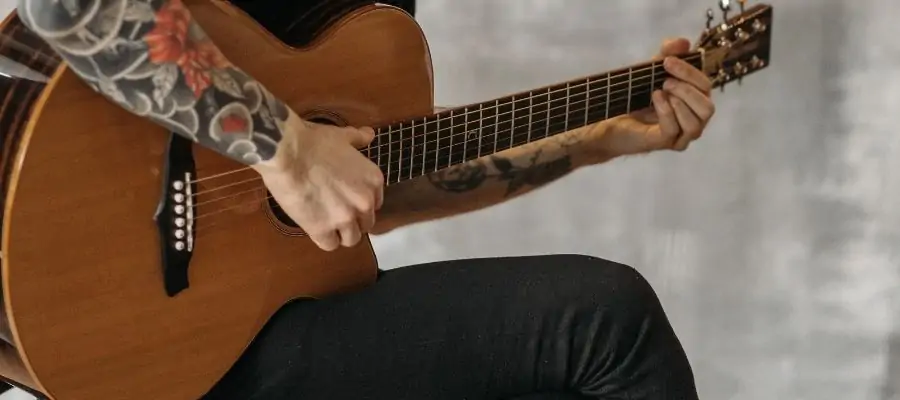
Every guitarist, from Eric Clapton to the teenager next door, faced these exact physical barriers.
1. The Callus Phase (Fretting Pain)
The Challenge: Pressing steel strings against wood hurts. For the first 2-4 weeks, your fingertips will be sore. The Fix:This is a rite of passage. Do not stop playing. Once your calluses form, the pain vanishes forever.
2. Left-Right Brain Disconnect
The Challenge: Your left hand is doing gymnastics (fretting) while your right hand is acting like a metronome (strumming). Syncing these two independent motions is the hardest cognitive hurdle. The Fix: Practice slowly. Isolate the hands—practice chord changes without strumming, then strumming with muted strings.
3. The Barre Chord Wall
The Challenge: The text mentions the F Major chord (barre chord) as a nightmare. It requires index finger strength that humans don’t naturally possess. The Fix: It’s about leverage, not just squeezing. Roll your index finger slightly to its side (the bony part) to catch the strings.
4. The “Buzz”
The Challenge: If your finger is too far from the fret wire, or not pressing hard enough, the note will buzz or sound “dead.” The Fix: Arc your fingers. Imagine holding a tennis ball; your fingertips should come down perpendicular to the fretboard, not flat.
5. Pick Control
The Challenge: Beginners often hold the pick too loosely (dropping it) or too tightly (creating a stiff, robotic sound). The Fix: Hold the pick like a key you are turning in a lock. It should be firm but flexible.
The Timeline: How Long Does It Actually Take?
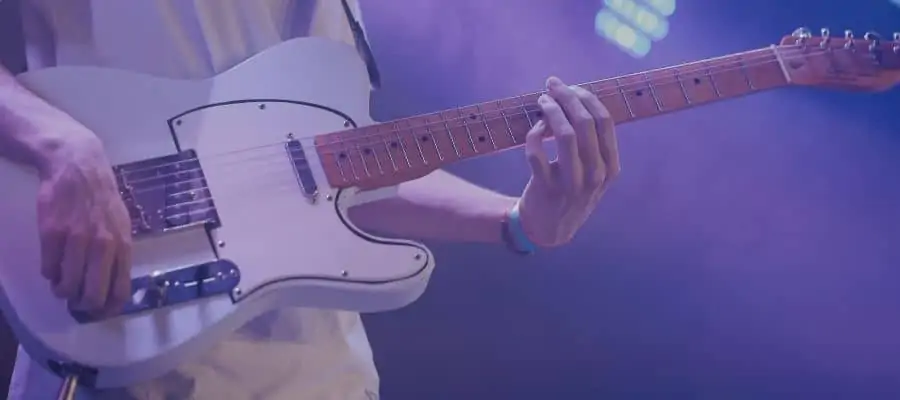
“Learning guitar” is subjective. Here is a realistic breakdown based on daily 30-minute practice sessions:
Expert Tip: If you want to play like Stevie Ray Vaughan, realize that “years” is the measurement unit, not months. But if you want to play “Wonderwall” or “Hotel California,” 6 months of dedication is realistic.
How Long It Might Take To Learn Guitar?
This mostly depends on the person, goals, and time you spent playing. If you plan on learning chords only, and to be able to play some simple songs, with enough practice you might be there in several months.
However, if you plan on creating your music, and playing incredible solos, and becoming a guitar player like Stevie Ray Vaughan, it will take you a lot longer. Music is such a huge area, that even after fifty years, there will be so many things you don’t know.
If you play four or five days a week, around half an hour per session, you will have incredible results in only six months. You will probably be able to play chords, strumming patterns, you’ll be able to read tabs, and probably do some cool solo. The commitment is quite important and in just six months you will be able to do a lot even if you never had any experience playing instruments.
So, the answer to how long it might take is? depends. If you want to play for more than 30 minutes each day, that’s great! You will be able to do a lot more in six months. On the other hand, if you want to play ten minutes each day, that’s also great. You won’t be able to play complex guitar solos after six months, but maybe that’s not your goal and you will be equally happy as someone who plays for hours each day. So be sure to set your own goals and plan what kind of guitar player you want to be.

Self-Taught vs. Lessons: Can You Go It Alone?
The era of needing a local teacher with a confusing book is over.
The Self-Taught Route Legends like BB King and Jimi Hendrix were self-taught. Today, you have YouTube, JustinGuitar, and apps like Fender Play.
Pros: Free, learn at your own pace, focus only on what you like.
Cons: No feedback loop. You might develop “bad habits” (like poor thumb positioning) that will cause injury or limit your speed later.
The Mentor Route
Pros: Immediate correction of technique. Structured roadmap. Accountability.
Cons: Cost and scheduling.
Recommendation: If you go the self-taught route, record yourself on video once a week. Watch it back. You will see mistakes in your posture and hand position that you don’t feel while playing.
The Golden Rule: Frequency > Duration
Consistency is king.
Muscle memory is not built by a 5-hour marathon on Saturday. It is built by 20 minutes every single day. Your brain needs sleep to process the new finger movements.
The “Noodling” Trap: Do not just sit on the couch and play what you already know. That is playing, not practicing.
Deliberate Practice: Spend 15 minutes working on what you can’t do (a new chord, a scale, a difficult transition).
Conclusion
Is learning guitar hard? It is challenging in the beginning because it is physical. It requires dexterity and skin toughness. But unlike the violin (where you can play out of tune for years), the guitar offers a quick reward system. Learn three chords (G, C, D), and you can play thousands of songs.
The difficulty is front-loaded. Push through the first three months of sore fingers and awkward chord changes, and you will have a skill that lasts a lifetime.