

Can You Play Electric Guitar Through a Bass Amp? (The Truth & The Tone)
By Gecko Guitars
I remember the first time I did it, at a rehearsal studio, my tube amp blew a fuse, and the only thing left in the room was a dusty Peavey bass combo. I plugged my Stratocaster into it, wincing, fully expecting it to sound like mud—or worse, to catch fire.
Instead, I got one of the cleanest, fattest jazz tones I’d ever heard.
The short answer is: Yes, you can absolutely play an electric guitar through a bass amp. It is 100% safe. In fact, some of the greatest guitar tones in history (think Jimi Hendrix, Stevie Ray Vaughan, and Josh Homme) came from amps originally designed for bass.
However, just because you can doesn’t mean it always sounds good. Here is my deep dive into why you might want to try it, what to watch out for, and why the “wrong” amp might be the right choice for your sound.
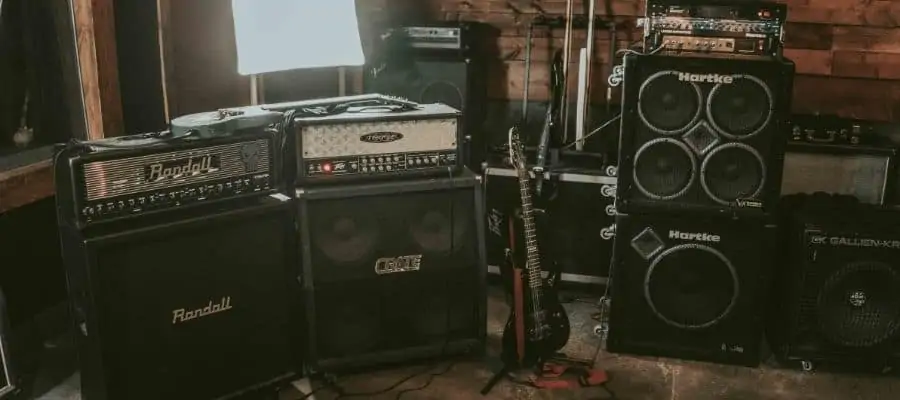
The Safety Check: Will It Explode?
Let’s get the anxiety out of the way first.
Guitar into Bass Amp: SAFE. A bass amp is designed to handle the massive energy of low-frequency bass waves. The high-pitched, lower-energy signal of a guitar is a walk in the park for a bass amp. You will not blow the speakers.
Bass into Guitar Amp: DANGEROUS. Do not do this. Guitar speakers are built with thin, stiff paper cones designed for mid-range frequencies. If you hit a low E on a bass through a guitar cabinet at volume, you will likely tear the speaker cone or melt the voice coil.
The Verdict: You can plug your Les Paul into an Ampeg stack all day long without worry.
The Main Difference: Headroom & Frequencies
Why do they sound different? It comes down to Headroom.
Guitar Amps are designed to distort. We want them to break up. When you crank a Marshall or a Vox, the tubes saturate, and the speaker compresses to create that glorious rock crunch. They focus heavily on mid-range frequencies (where the guitar lives).
Bass Amps are designed to stay clean. They have massive power transformers and high wattage because reproducing low frequencies cleanly requires a lot of energy.
The Result: When you plug a guitar into a bass amp, it typically won’t distort. You can turn it up to stadium volumes, and it will stay crystal clear. This is what we call “High Headroom.”
3 Reasons Why I Love Guitar Through Bass Amps
If you are a metal shredder looking for natural amp distortion, you will hate bass amps. But for other players, they are a secret weapon.
1. The Ultimate “Pedal Platform”
Because bass amps don’t distort on their own, they are the perfect blank canvas for pedals. If you use a lot of reverb, delay, and fuzz (like Shoegaze or Post-Rock players), a bass amp reproduces exactly what the pedal is doing without “coloring” the tone.
Pro Tip: A Big Muff fuzz pedal sounds absolutely massive through a bass amp because the amp doesn’t cut the low-end frequencies like a standard guitar amp does.
2. The “Queens of the Stone Age” Sound
If you play Stoner Rock or Doom Metal, a bass amp is often better than a guitar amp. Guitarists like Josh Homme (Kyuss/QOTSA) famously used bass cabs to get that thick, heavy, wall-of-sound tone that hits you in the chest.
3. The Jazz Standard
Jazz guitarists don’t want breakup. They want warm, round, clean tones. A bass amp with a 15-inch speaker provides a depth and warmth that a screechy Fender Twin Reverb sometimes lacks.
The Exception: The Fender Bassman
You can’t talk about this topic without mentioning the Fender Bassman.
Released in the 1950s, it was built for the Precision Bass. But bass players hated it—it wasn’t loud enough. Guitar players, however, realized that if you cranked it up, it produced the most musical overdrive ever heard.
Fact: The Marshall JTM45 (the first Marshall amp) was literally a direct clone of the Fender Bassman circuit.
The Lesson: The most iconic “guitar amp” in rock history was technically a bass amp.
How to EQ a Bass Amp for Guitar
If you just plug in and play, it might sound “wooly” or muffled. Bass amps are voiced for… well, bass. Here is how I set them up for guitar:
Cut the Bass: I usually roll the Bass knob down to 3 or 4. The guitar doesn’t need sub-frequencies, and they can clash with the actual bass player.
Boost the Mids: This is crucial. Guitar is a mid-range instrument. If the amp has a “Mid” or “High Mid” knob, crank it to 7 or 8 to help the guitar cut through the mix.
Add a “Preamp” Pedal: Since the amp sounds dry, I almost always use an “Amp-in-a-box” pedal (like a SansAmp or a distortion pedal) to simulate the grit of a guitar amp.
Speakers Matter: 10s vs 15s
The speaker size in the bass cabinet makes a huge difference.
4×10 Cabinets: excellent for guitar. 10-inch speakers are punchy and fast. They respond well to guitar transients.
1×15 Cabinets: These can be hit or miss. They sound huge and slow. Great for slow, doomy riffs or jazz, but they can sound muddy for fast, technical playing.
Conclusion: Should You Do It?
If you are in a pinch, or if you are bored with your tone and want to experiment, do it.
Don’t let the label on the front of the amp dictate how you use it. If it sounds good, it is good. Just remember: if you are looking for natural tube overdrive, you won’t find it here. But if you want a massive, clean canvas to paint your sonic picture on, a bass amp might just be the upgrade you didn’t know you already owned.